Young People on Personal Independence Payment Debate
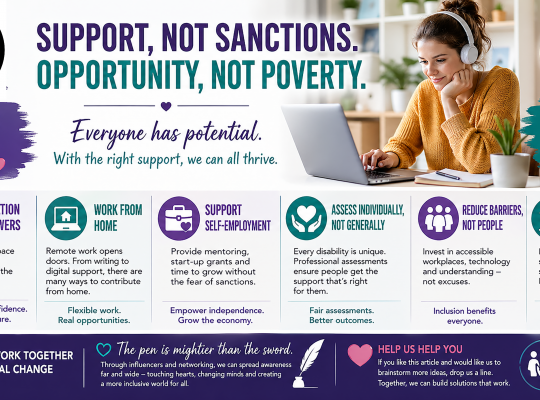
An in-depth look at young people on Personal Independence Payment, challenging claims that some conditions are “non-work-limiting” and exploring how disabilities affect employment.
DISABLED ENTREPRENEUR – DISABILITY UK
Disability UK Online Health Journal – All In One Business In A Box – Forum – Business Directory – Useful Resources – Health – Human Rights – Politics
DISABLED ENTREPRENEUR – DISABILITY UK
Disability UK Online Health Journal – All In One Business In A Box – Forum – Business Directory – Useful Resources – Health – Human Rights – Politics
Browsing Category

An in-depth look at young people on Personal Independence Payment, challenging claims that some conditions are “non-work-limiting” and exploring how disabilities affect employment.

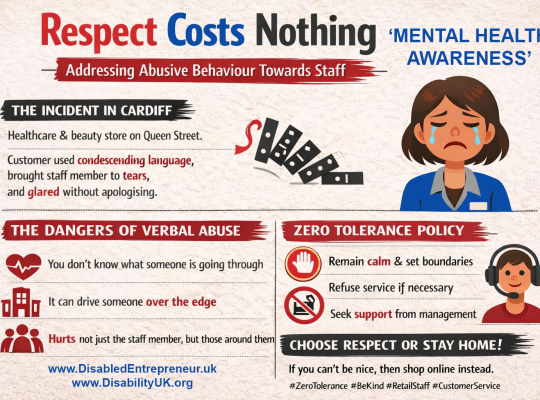
An eye-opening article on abusive behaviour towards staff, highlighting a real incident in Cardiff, and why respect, accountability, and zero tolerance policies must be upheld in public spaces.

How Wales can improve disability inclusion through accessible workplaces, remote work, inclusive startups, and community initiatives.

Exploring UK disability employment reforms, the Disability Confident scheme, and inclusive models to help disabled and long-term sick people return to work, including employment, entrepreneurship, and community support through DisabilityUK.org.

For disabled entrepreneurs in the UK who are considering self-employment for the first time or rebuilding after a job that didn’t fit, business ownership challenges often start before day one: inaccessible spaces and systems, inconsistent support, and the worry that discrimination will show up in customers, suppliers, or paperwork. Add health and energy limits, fluctuating costs, and confusing rules, and it can feel like the business world was designed for someone else.

When employees request accommodations at work, particularly for health reasons or to balance work with education, they have the right to be treated fairly. However, what happens when an employer doesn’t respect these requests? In cases where employees face unfair treatment or increased workloads due to their health or personal commitments, it is essential to understand what rights may have been violated.

Job hunting and running a business share a common struggle; despite effort, visibility, and determination, opportunities remain scarce. The case of Joe Emery highlights the reality that many people face: endless applications, countless rejections, and a system that seems blind to the human toll of unemployment. Businesses, particularly disabled entrepreneurs, mirror this struggle, working tirelessly yet seeing minimal returns.

Attending an internal interview is a legitimate part of your employment and, in most cases, should not result in a loss of pay or forced time off in lieu. Unless your contract specifically allows for it, any deduction may be unlawful. If this happens, you have the right to challenge it and, if necessary, seek legal redress.

In many UK workplaces, employees are expected to work an 8-hour day, yet only receive payment for 7 of those hours due to an unpaid break. While this practice is legally permissible under the Working Time Regulations 1998, it raises serious questions about fairness, autonomy, and potential human rights violations, especially when employers go a step further and dictate what an employee can or cannot do during their unpaid time.

Job hunting can be an emotional rollercoaster. For many applicants, it’s not just about career advancement, it’s about survival, stability, and dignity. Yet far too often, candidates are left in the dark, ignored for months or indefinitely “ghosted” after investing time, energy, and hope into their application. The silence can be deafening, and detrimental to mental health.