Cosmetic Hygiene in Retail: Why Sealed Products Are Not a Luxury but a Necessity
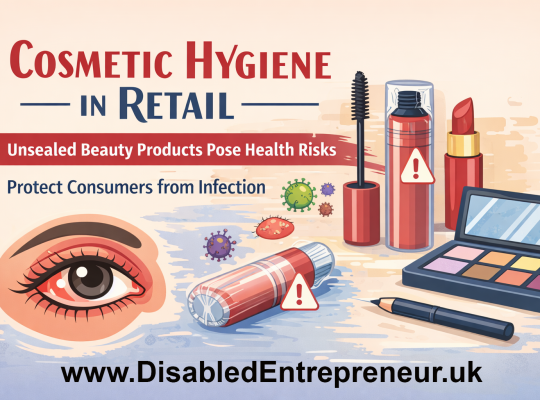
Cosmetic hygiene in retail: Why unsealed beauty products pose serious health risks, including eye infections, and why stricter safety measures are needed.
DISABLED ENTREPRENEUR – DISABILITY UK
Disability UK Online Health Journal – All In One Business In A Box – Forum – Business Directory – Useful Resources – Health – Human Rights – Politics
DISABLED ENTREPRENEUR – DISABILITY UK
Disability UK Online Health Journal – All In One Business In A Box – Forum – Business Directory – Useful Resources – Health – Human Rights – Politics
Browsing Category

Cosmetic hygiene in retail: Why unsealed beauty products pose serious health risks, including eye infections, and why stricter safety measures are needed.

An in-depth look at depression, trauma, and PIP assessments, exploring why outward behaviour does not reflect mental health and how self-help strategies support recovery.

How insensitive questioning in healthcare can trigger intrusive thoughts and trauma responses. Learn about the psychology behind trigger wording, patient rights, and legal protections in the UK.

Are annual prescription reviews mandatory? Learn your rights across the UK, including consent, blood tests, mental health medication, self-isolation, and GP accountability.

Mental health does not discriminate. A lived-experience perspective on anxiety, depression, OCD, trauma, stigma, and why careless media rhetoric harms vulnerable communities seeking support and hope.

Intrusive thoughts can feel frightening and convincing, especially when linked to paranoia, ulterior motives, and superstitions like fear of the number 13. Learn what intrusive thoughts are, what triggers them, and how to overcome them using evidence-based approaches.

A first-person account of mental-health stigma within a traditional rural Polish family: why it’s hard to explain mental health to older generations, how judgement impacts wellbeing, and what the statistics say about stigma and discrimination in Poland.

Discover the importance of recognising hidden disabilities and supporting individuals with non-visible conditions. Learn how retailers, businesses, schools, and employers can promote inclusion through the Hidden Disabilities Sunflower Scheme, staff awareness, and everyday respect.

People with OCD don’t “choose” their thoughts or compulsions. Telling someone to “just get over it” is dismissive, harmful, and perpetuates ableist attitudes. If someone has lived with OCD for decades and tried all known interventions, Cognitive Behavioural Therapy (CBT), Exposure and Response Prevention (ERP), medication, counseling, and even alternative therapies such as hypnosis, it is unjust to boil their suffering down to a fad.

Invisible disabilities deserve recognition, understanding, and respect. Ableist attitudes rooted in ignorance and dismissiveness create barriers that can be just as disabling as the condition itself. Instead of questioning someone’s reality or minimising their struggles, we should listen, believe, and support. The lived experiences of those with invisible disabilities, like the editor who has battled OCD for decades, remind us that what cannot be seen can still have profound impact. True inclusivity means dismantling ableism and embracing empathy.