Disclaimer: This article is for informational and educational purposes only and does not constitute medical advice. Always consult a qualified healthcare professional for diagnosis and treatment of any medical condition. If you experience severe symptoms, seek immediate medical attention.
A Practical Guide to Disc Bulges, Nerve Compression, and Their Impact on Daily Life
What Is a Spinal Disc Protrusion?
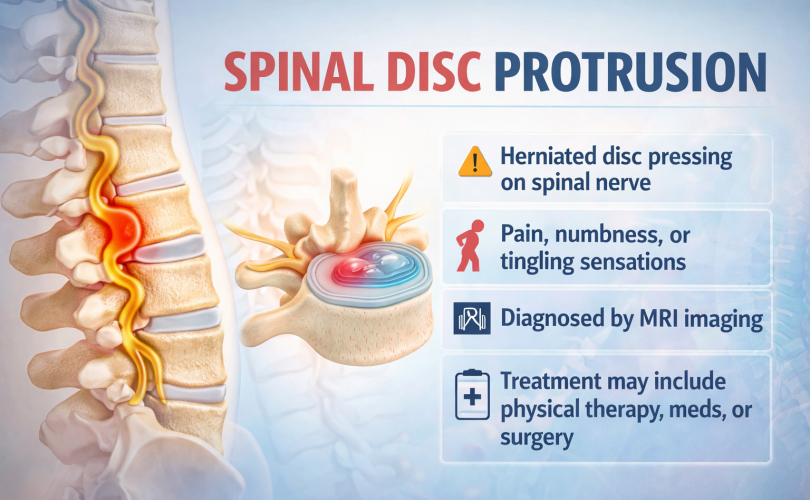
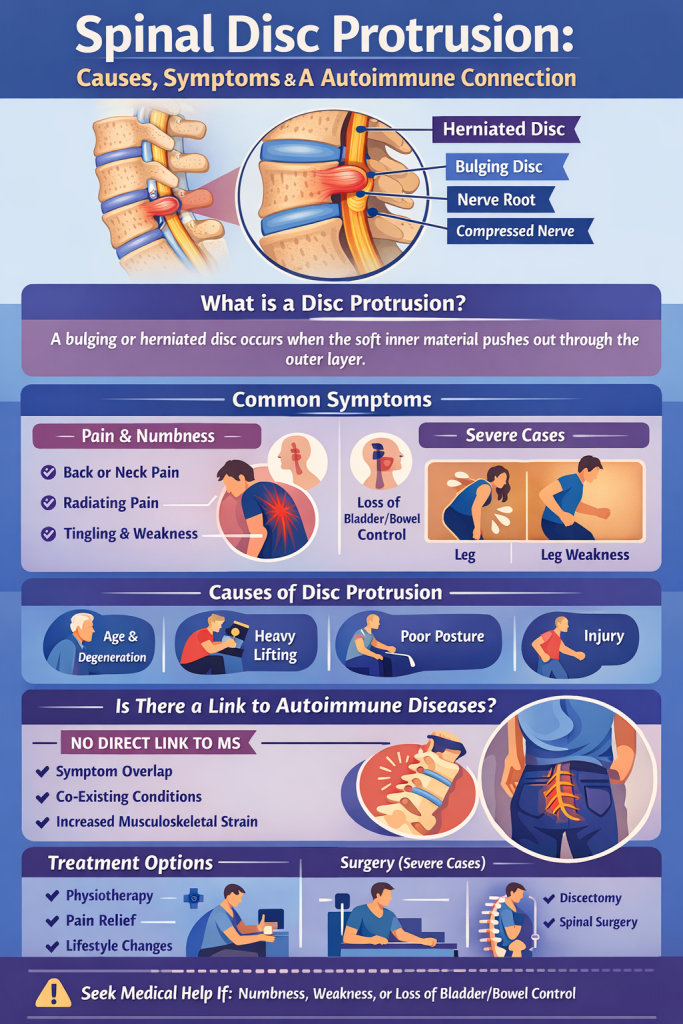
A spinal disc protrusion, often referred to as a bulging or herniated disc, occurs when one of the soft cushioning discs between the vertebrae extends beyond its normal boundary.
Each spinal disc has:
- A tough outer layer (annulus fibrosus)
- A soft inner core (nucleus pulposus)
When the outer layer weakens, the inner material can push outward, causing a protrusion. If this presses on nearby nerves, it can lead to pain and neurological symptoms.
Common Causes of Disc Protrusion
Spinal disc protrusions can develop gradually or suddenly due to:
- Age-related degeneration (most common)
- Repetitive strain or poor posture
- Heavy lifting or improper lifting techniques
- Trauma or injury
- Sedentary lifestyle
- Obesity (increased spinal pressure)
Symptoms to Look Out For
Symptoms depend on the location and severity of the protrusion:
General Symptoms
- Localised back or neck pain
- Stiffness and reduced mobility
- Muscle weakness
Nerve-Related Symptoms
- Radiating pain (e.g., sciatica in the lower back)
- Tingling or “pins and needles.”
- Numbness
- Burning sensations
Severe Cases
- Loss of bladder or bowel control (medical emergency)
- Significant weakness in limbs
Common Locations of Disc Protrusion
- Lumbar spine (lower back) – most common
- Cervical spine (neck) – may affect arms and hands
- Thoracic spine (mid-back) – less common
Diagnosis and Medical Assessment
Diagnosis typically involves:
- Physical examination
- Neurological testing
- Imaging such as:
- MRI scans
- CT scans
- X-rays (to rule out other causes)
Early diagnosis is important to prevent worsening nerve damage.
Treatment Options
Conservative (Non-Surgical) Treatments
- Rest and activity modification
- Physiotherapy
- Pain relief medication
- Anti-inflammatory drugs
- Steroid injections
Lifestyle Adjustments
- Improving posture
- Weight management
- Core strengthening exercises
Surgical Options (if severe)
- Discectomy (removal of disc material)
- Spinal decompression surgery
Most people improve without surgery.
Is There a Link Between Disc Protrusion and Autoimmune Diseases Like Multiple Sclerosis?
This is an important and often misunderstood question.
Short Answer:
There is no direct causal link between spinal disc protrusion and autoimmune diseases such as multiple sclerosis (MS).
However, there are important overlaps:
1. Symptom Similarities
Both conditions can cause:
- Numbness
- Weakness
- Pain
- Mobility issues
This can sometimes lead to misdiagnosis or delayed diagnosis.
2. Co-Existence
A person can have both:
- Mechanical spinal issues (like disc protrusion)
- Neurological conditions (like MS)
Especially as both can develop independently.
3. Increased Vulnerability
People with MS may:
- Experience muscle weakness
- Have an altered gait or posture
This can increase the risk of musculoskeletal strain, potentially contributing to spinal issues.
4. Diagnostic Complexity
Doctors must carefully distinguish between:
- Nerve compression (structural)
- Nerve damage (neurological/autoimmune)
MRI scans are often used to differentiate between the two.
When to Seek Medical Advice
You should seek medical attention if you experience:
- Persistent back or neck pain
- Pain radiating into arms or legs
- Numbness or weakness
- Difficulty walking or standing
- Loss of bladder or bowel control (urgent)
Living With a Disc Protrusion
Many people live full lives with proper management:
- Stay active within limits
- Follow physiotherapy guidance
- Avoid prolonged sitting
- Use ergonomic furniture
- Manage stress (which can worsen pain perception)
Conclusion
I have recently been diagnosed with optic neuritis and a spinal disc protrusion. My primary condition is multiple sclerosis. I am 25 years old, and as part of the annual health review required for my alemtuzumab treatment, I undergo a yearly MRI scan. The latest results have identified additional lesions on both my brain and spine, and there is growing concern regarding my vision.
In relation to my back, I have been experiencing burning sensations in my legs, and I am currently in constant back and leg pain despite being on the highest dose of medication available to me.
Although this has been difficult news to process, I remain determined not to let it diminish my resilience. While it was understandably upsetting, I am grateful to have a strong support network around me. As the saying goes, what does not kill you makes you stronger.
For clarity, a spinal disc protrusion is a relatively common condition that can range from mild discomfort to more significant nerve-related symptoms. Although it is not directly associated with autoimmune conditions such as MS, the overlap in symptoms can make diagnosis and management more complex.
Further Reading & Resources
- Slipped disc – NHS
- Disk Protrusion – Radiology In Plain English
- British Association of Spine Surgeons – Lumbar Disc Protrusions
- What Is Disc Protrusion? Causes, Symptoms, and Treatment – Biology Insights
- Spinal Protrusion: Causes and Effective Treatments
- Types of Spinal Disc Herniation
- What Is a Disc Protrusion and How Does It Affect the Spine?
- What Causes a Disc Protrusion? | Advanced Spine Center
- Lumbar Disc Protrusion: Causes, Symptoms & Management
- Spinal Disc Problems London, UK | Pinched Nerve London, UK


Zena graduated with a Distinction in MSc International Business Management | First Class Graduate in BA (Hons) Marketing Management | Distinction in CIM Level 4 Digital Marketing Techniques
Zena is the co-founder and sub-editor of DisabledEntrepreneur.UK & DisbilityUK.co.uk Zena may look normal to an untrained eye even though she has an invisible disability, thanks to a great support network she is able to adapt into society and has additional help, whenever she needs it.
Zena aspires to be a role model for young people with Multiple Sclerosis. She too suffers from MS and encounters chronic pain symptoms in the legs and has noticed cognitive impairment and muscle weakness.
Recognized as a 'Cosmetic Champion Influencer', she celebrates the innovation, glamour, and empowering spirit that define Disabled Entrepreneur - Disability UK Affiliate Partner Beauty Ranges.
When it comes to marketing Zena works remotely which does not put an added strain on her health. She writes articles and posts on an array of subjects, namely health and wellbeing, business,. She also does social media management, content creation and digital marketing, whilst promoting DisabledEntrepreneur.uk and DisabilityUK.co.uk brands.