Contractual Law: The Invisible Framework Governing Everyday Life
A comprehensive guide to contractual law in the UK, explaining its importance in business and everyday life, with examples of contracts, consumer rights, and legal support resources.

DISABLED ENTREPRENEUR – DISABILITY UK
Disability UK Online Health Journal – All In One Business In A Box – Forum – Business Directory – Useful Resources – Health – Human Rights – Politics
DISABLED ENTREPRENEUR – DISABILITY UK
Disability UK Online Health Journal – All In One Business In A Box – Forum – Business Directory – Useful Resources – Health – Human Rights – Politics
Browsing Category
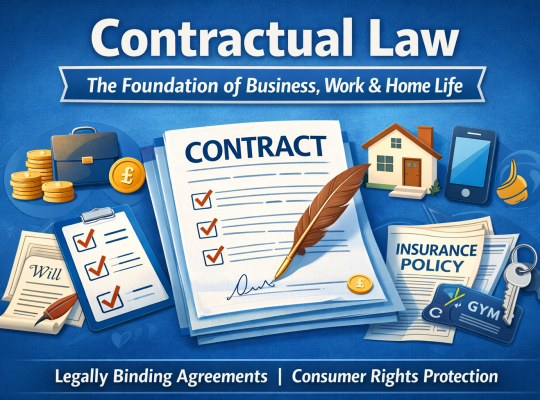
A comprehensive guide to contractual law in the UK, explaining its importance in business and everyday life, with examples of contracts, consumer rights, and legal support resources.
Civil law governs disputes between individuals or organizations, aiming to resolve issues like contracts, property, and family matters through compensation or court orders. Tort law is a branch of civil law that deals specifically with wrongful acts, such as negligence or defamation, where one party causes harm to another, and the injured party can seek damages.
The Disability Discrimination Act 1995 has been replaced by the Equality Act 2010, but its spirit lives on. The Equality Act not only carried forward the protections of the DDA but also expanded them, creating a more comprehensive framework for tackling discrimination. For disabled people, this means their rights are now protected under a single, stronger piece of legislation, but ensuring those rights are respected still requires continued advocacy, awareness, and enforcement.
Police powers are vital for maintaining law and order, but they must always be balanced with civil liberties and human rights. Vulnerable groups, particularly minors and disabled individuals, require additional safeguards to prevent abuse or discrimination. Understanding your rights under PACE, questioning the use of stop and search, and knowing the complaint procedures are essential tools for seeking justice when things go wrong.
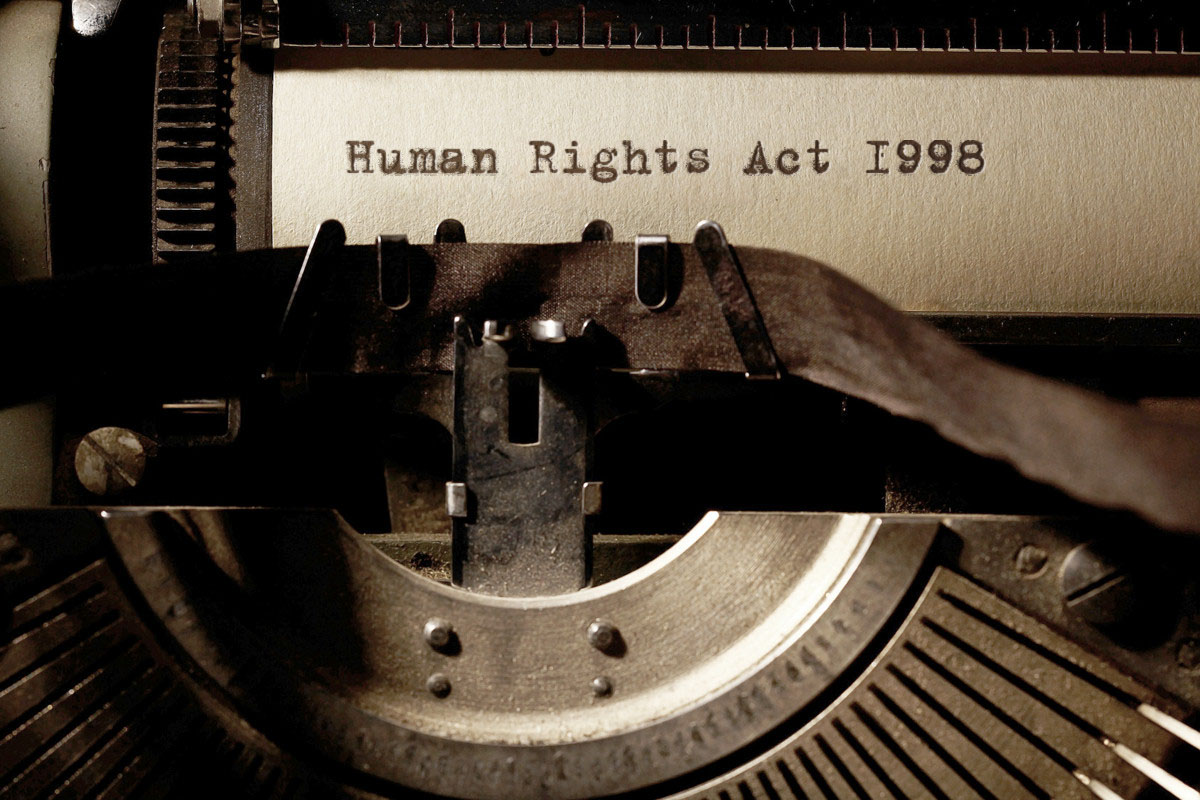
Reducing welfare payments in the name of fiscal savings directly undermines human rights protections meant to ensure dignity, equality, and security for all. When economic decisions neglect the real-world consequences for the most vulnerable, they risk violating the Human Rights Act, the Equality Act, and international human rights standards. Rather than shrinking support, the government should focus on policies that uplift all members of society and reinforce fundamental rights.

The Department for Work and Pensions (DWP) has appointed disability rights expert Zara Todd to chair the new Independent Disability Advisory Panel. The panel is billed as a way to “listen to, learn from, and collaborate with” Deaf and disabled people and people with long-term health conditions. It will include up to 10 members and advise across health and disability policy.

Britain has seen a notable rise in the number of individuals claiming long-term sickness benefits, according to the latest data from the UK Office for National Statistics (ONS) over 2.5 million people are now classified as economically inactive due to long-term illness, a record high.

Britain’s strength has always been in its diversity and resilience. Those of us born here, regardless of our heritage or the sound of our names, are as much a part of this country as anyone else. Not all foreigners should be put in the same category. Our policies and attitudes should focus on real issues, such as illegal immigration, while protecting the dignity, safety, and rights of British citizens of all backgrounds.

For both abled and disabled individuals, property transactions can be stressful, particularly if mobility, mental health, or accessibility needs are overlooked. Therefore, it’s essential to work with professionals who understand these challenges and can provide tailored support throughout the process.

The prevalence of child poverty is not an accident; it is a consequence of policies, priorities, and political inertia. When the government subsidises steak dinners in Westminster while a child in the UK skips meals, something is deeply broken. If deprivation becomes acceptable, we risk losing the very soul of our society. It’s time for bold, compassionate leadership that puts children first, not after debates, not after budgets, but now.