Disclaimer: This article is for informational and awareness purposes only and does not constitute medical advice. If you or someone you care for is experiencing symptoms of optic neuritis or any changes in vision, please seek professional medical guidance from a qualified healthcare provider. Every individual’s condition is unique, and treatment outcomes may vary.
Understanding the symptoms, recovery potential, and emotional impact of optic neuritis
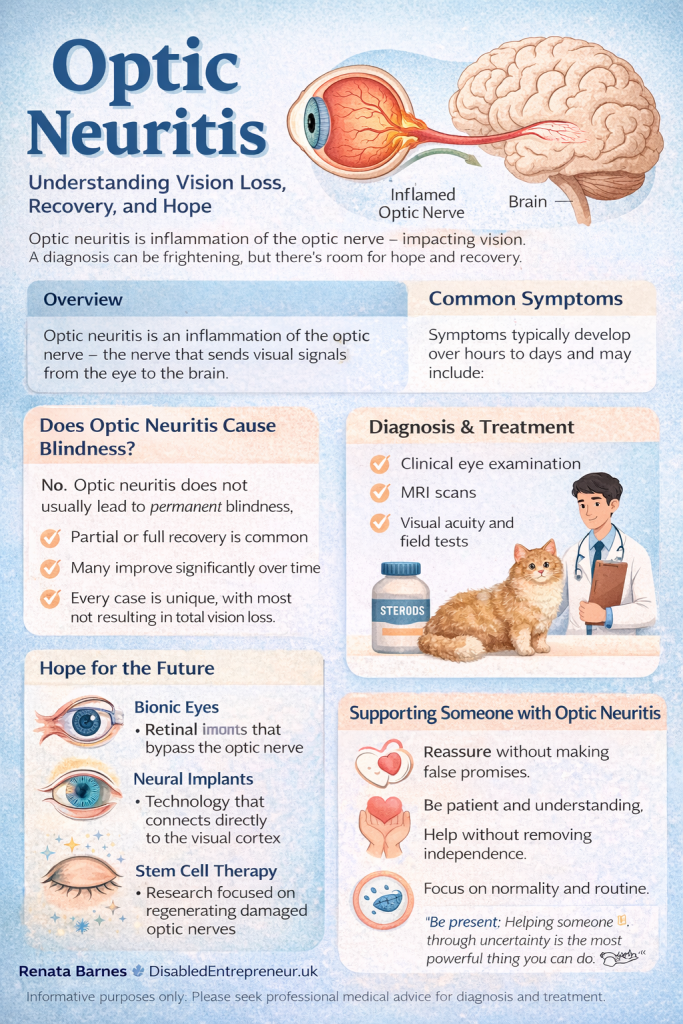
Receiving a diagnosis of optic neuritis can be frightening, particularly when vision is affected. For many, the immediate fear is permanent sight loss. However, while optic neuritis is a serious neurological condition, it is important to understand that it does not automatically lead to blindness.
Here we explore what optic neuritis is, its symptoms, treatment options, and the growing advancements in vision restoration. It also provides guidance for carers supporting someone facing this diagnosis.
What is Optic Neuritis?
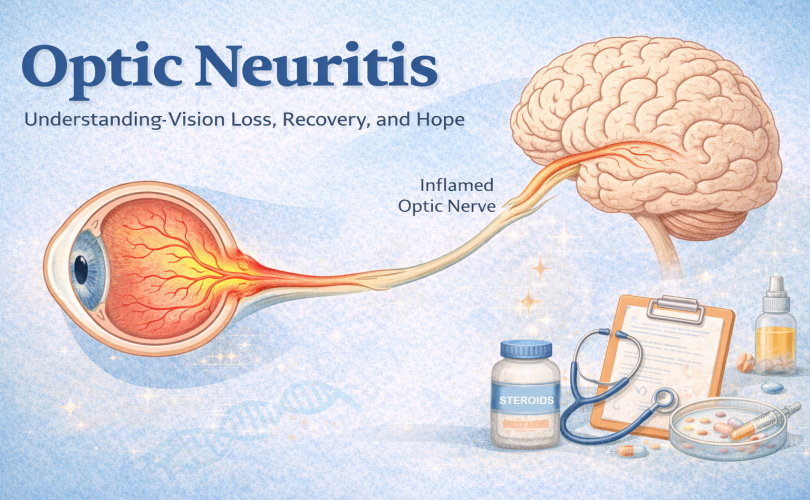
Optic neuritis is an inflammation of the optic nerve, the structure responsible for transmitting visual information from the eye to the brain.
When the optic nerve becomes inflamed, signals between the eye and brain are disrupted, leading to changes in vision. The condition is often associated with autoimmune responses, where the body mistakenly attacks its own nerve fibres.
In some cases, optic neuritis can be linked to neurological conditions such as Multiple Sclerosis, although not everyone diagnosed will go on to develop it.
Common Symptoms
Symptoms of optic neuritis can develop rapidly, often over hours or days. These may include:
- Blurred or reduced vision in one eye
- Pain behind the eye, especially when moving it
- Loss of colour vision (colours may appear faded or “washed out”)
- Temporary vision loss
- Flashing lights or visual disturbances
For many individuals, these symptoms can be distressing, particularly when they appear suddenly.
Does Optic Neuritis Cause Blindness?
One of the most important things to understand is that optic neuritis does not usually cause permanent blindness.
While vision may be significantly affected during an episode, many people experience:
- Partial recovery of vision
- Significant improvement over weeks or months
- In some cases, near-complete recovery
Every case is different, but the condition is often temporary rather than progressive blindness.
Diagnosis and Treatment
Diagnosis is typically made by a neurologist or ophthalmologist using:
- Clinical eye examination
- MRI scans
- Visual acuity and field tests
Treatment Options
Treatment depends on the severity of symptoms, but may include:
- Steroid therapy to reduce inflammation
- Pain management
- Monitoring for underlying neurological conditions
Steroids can help speed up recovery, although vision often improves naturally over time.
The Future: Vision Restoration and Medical Advances
Medical science continues to advance rapidly, offering hope for those affected by vision-related conditions.
Emerging technologies include:
Bionic Eyes (Retinal Implants)
Devices are designed to bypass damaged parts of the eye and stimulate visual signals directly.
Neural Implants
Technology that connects directly with the brain to restore visual processing.
Stem Cell Therapy
Research is ongoing into regenerating damaged nerve tissue.
While these treatments are still developing, they represent a future where vision loss may no longer be permanent.
Living with Optic Neuritis
A diagnosis of optic neuritis can feel overwhelming, but support and adaptation can make a significant difference.
Practical Adjustments
- Use larger text and high-contrast settings on devices
- Improve home lighting
- Reduce visual strain where possible
Emotional Impact
It is completely normal to feel anxious, frustrated, or fearful, especially when vision is affected.
The key is to focus on:
- What is known (you are being monitored)
- What is possible (recovery is common)
- What is not certain (worst-case outcomes are not guaranteed)
Supporting Someone with Optic Neuritis (For Carers)
If you are supporting someone with this condition, your role is incredibly important.
What Helps Most
- Reassurance without false promises
→ “We don’t know the outcome yet, but we’ll face it together.” - Patience and understanding
→ Vision changes can be frustrating and disorienting - Maintaining normality where possible
→ Laughter, conversation, and routine matter more than you think - Helping without removing independence
→ Offer support, but allow them control where they can
Sometimes, the most powerful thing you can do is simply be present.
A Message of Hope
While optic neuritis can be a frightening diagnosis, it is not the end of the story.
Many people recover significant vision, and ongoing advances in medicine continue to improve outcomes for those affected.
Fear often comes from uncertainty, but uncertainty also leaves room for improvement, recovery, and hope.
Conclusion
Life really has been testing me lately. On top of dealing with a ridiculous vet dispute, where they’re now trying to claim that a health check and a consultation are two different things, and insisting my cat didn’t have anything wrong with him despite missing obvious stud‑tail lumps. They’re still attempting to invoice me even though I’m entitled to two free health checks a year. It’s exhausting, and it’s the last thing I needed while already feeling stretched thin. Then today, I get hit with devastating news about optic neuritis and a spinal disc protrusion. My mental health has taken a real knock, and my sense of humour pretty much evaporated under the weight of it all.
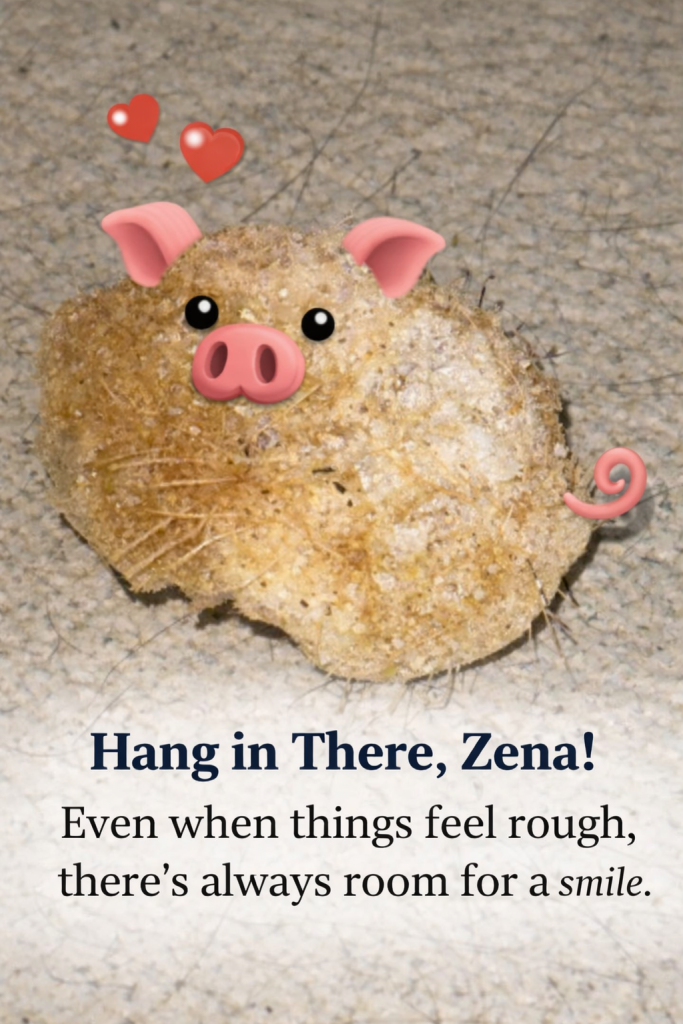
But then my mum, Renata the editor in her own wonderfully bizarre way, sends me a photo of a hairy pork scratching that she had found in her packet of pork scratchings and proudly introduces her as “Patricia the Pork Scratching.” And somehow, despite everything, I actually laughed. It broke through the heaviness for a moment and reminded me that even in the middle of chaos, something silly and unexpected can still reach me. So now, against all odds, “Patricia the Pork Scratching” is officially famous, a tiny, hairy bacon of comic relief in a week that has been anything but easy.
On a serious note though, optic neuritis is a serious but often manageable condition. Understanding the condition, seeking appropriate medical care, and maintaining emotional support are key to navigating this journey.
For those affected, and for those supporting people with optic neuritis, remember:
This diagnosis is not an outcome; it is a moment in a much larger journey.
Also, on the topic of pet cats if you have any like Tibbles my emotional support cat, it is a fact that cats can develop optic neuritis. It’s uncommon, but when it does occur, it’s usually a sign of another underlying illness rather than a standalone condition.


Zena graduated with a Distinction in MSc International Business Management | First Class Graduate in BA (Hons) Marketing Management | Distinction in CIM Level 4 Digital Marketing Techniques
Zena is the co-founder and sub-editor of DisabledEntrepreneur.UK & DisbilityUK.co.uk Zena may look normal to an untrained eye even though she has an invisible disability, thanks to a great support network she is able to adapt into society and has additional help, whenever she needs it.
Zena aspires to be a role model for young people with Multiple Sclerosis. She too suffers from MS and encounters chronic pain symptoms in the legs and has noticed cognitive impairment and muscle weakness.
Recognized as a 'Cosmetic Champion Influencer', she celebrates the innovation, glamour, and empowering spirit that define Disabled Entrepreneur - Disability UK Affiliate Partner Beauty Ranges.
When it comes to marketing Zena works remotely which does not put an added strain on her health. She writes articles and posts on an array of subjects, namely health and wellbeing, business,. She also does social media management, content creation and digital marketing, whilst promoting DisabledEntrepreneur.uk and DisabilityUK.co.uk brands.