Understanding Constitutional Law in the UK: The Rule of Law, Parliamentary Sovereignty and Fundamental Rights
Explore UK constitutional law, parliamentary sovereignty, the rule of law, separation of powers, human rights and judicial review.

DISABLED ENTREPRENEUR – DISABILITY UK
Disability UK Online Health Journal – All In One Business In A Box – Forum – Business Directory – Useful Resources – Health – Human Rights – Politics
DISABLED ENTREPRENEUR – DISABILITY UK
Disability UK Online Health Journal – All In One Business In A Box – Forum – Business Directory – Useful Resources – Health – Human Rights – Politics
Browsing Category

Explore UK constitutional law, parliamentary sovereignty, the rule of law, separation of powers, human rights and judicial review.

Should the UK give everyone legal ownership of their face and voice? As AI deepfakes and digital replicas become increasingly realistic, we examine UK copyright law, voice cloning, consent, identity rights, fraud, disability, digital likeness rights and whether Parliament should introduce new legislation.

Denmark is proposing copyright reforms to protect people from AI-generated deepfakes by giving individuals greater control over realistic digital reproductions of their face, body, voice and personal characteristics. We examine the proposed law, EU AI rules, consent, disability, fraud and whether the UK should introduce similar protections.

New UK laws will ban the sale and supply of wet wipes containing plastic, with Wales introducing restrictions from 18 December 2026. Learn which wipes are affected, medical and disability exemptions, environmental reasons for the ban and what consumers and businesses need to know.

The Anthropic AI controversy has become a global debate about who controls powerful artificial intelligence. We examine President Donald Trump’s order against Anthropic, the Pentagon dispute over Claude, Elon Musk’s warnings about AI, autonomous weapons, mass surveillance, human rights, vulnerable people and the implications for disabled communities.
The Welsh Government has raised significant concerns about co-production in the UK-wide Timms Review of Personal Independence Payment (PIP), calling for an independent disabled-led approach to future disability benefit reform. We examine what genuine co-production means, why Wales is challenging the current process, disability rights, safeguarding, the Social Model of Disability and whether PIP could eventually be devolved to Wales.

Kiena’s Law seeks a standalone offence for domestic abuse-related suicide, addressing coercive control, trauma, causation, homicide law and perpetrator accountability.

An in-depth UK article on paper waste, Net Zero, digital communication, postal costs, data protection, reasonable adjustments, Universal Credit reminders, SAR medical records, and privacy risks.

A legal analysis of Freedom of Information Act exemptions, focusing on Section 36 and how the “free and frank provision of advice” exemption may be used to limit government transparency and accountability.
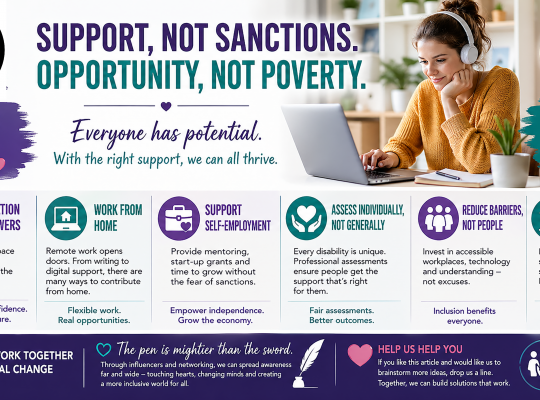
An in-depth look at young people on Personal Independence Payment, challenging claims that some conditions are “non-work-limiting” and exploring how disabilities affect employment.