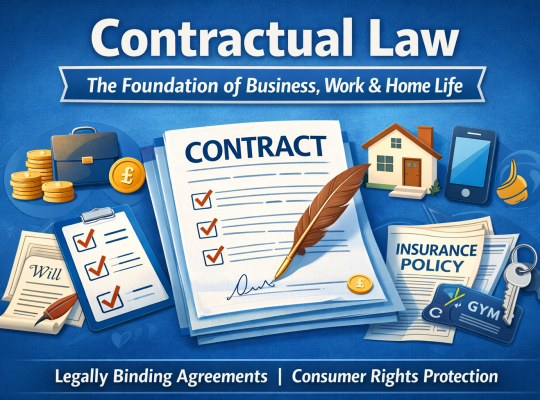
Contractual Law: The Invisible Framework Governing Everyday Life
A comprehensive guide to contractual law in the UK, explaining its importance in business and everyday life, with examples of contracts, consumer rights, and legal support resources.
DISABLED ENTREPRENEUR – DISABILITY UK
Disability UK Online Health Journal – All In One Business In A Box – Forum – Business Directory – Useful Resources – Health – Human Rights – Politics
DISABLED ENTREPRENEUR – DISABILITY UK
Disability UK Online Health Journal – All In One Business In A Box – Forum – Business Directory – Useful Resources – Health – Human Rights – Politics
Browsing Category

A comprehensive guide to contractual law in the UK, explaining its importance in business and everyday life, with examples of contracts, consumer rights, and legal support resources.

Explore the barriers disabled individuals face in politics and discover how to overcome challenges. Learn tips for aspiring disabled politicians to get involved and make a difference in the political arena.

Immigration is one of the most misunderstood subjects in the UK, often distorted by political rhetoric and media headlines. Yet behind every migrant is a human story shaped by war, persecution, economic collapse or the simple desire for safety and stability. This article explores how immigration affects the UK economy, why people flee their homelands, and how dehumanising language used by public figures fuels fear, hostility and division.

Civil law governs disputes between individuals or organizations, aiming to resolve issues like contracts, property, and family matters through compensation or court orders. Tort law is a branch of civil law that deals specifically with wrongful acts, such as negligence or defamation, where one party causes harm to another, and the injured party can seek damages.

Balancing Security, Privacy, and Accessibility in the UK’s New Digital ID System In September 2025, the UK government announced a plan to introduce a mandatory digital ID for citizens and …

The Disability Discrimination Act 1995 has been replaced by the Equality Act 2010, but its spirit lives on. The Equality Act not only carried forward the protections of the DDA but also expanded them, creating a more comprehensive framework for tackling discrimination. For disabled people, this means their rights are now protected under a single, stronger piece of legislation, but ensuring those rights are respected still requires continued advocacy, awareness, and enforcement.

The Union Jack controversy highlights a deep divide between patriotism and humanitarian duty. British citizens should feel free to be proud of their heritage, while migrants should not be dehumanised. Ultimately, ‘ALL HUMANS DESERVE DIGNITY’ and the protection of their basic rights, regardless of citizenship. The real path forward lies not in pitting communities against each other, but in finding fair, practical solutions that honour both national sovereignty and universal human rights.

The UK government’s move to abolish the Human Rights Act and potentially leave the ECHR could leave citizens with no enforceable rights. What would this mean for the public, migrants, and democracy?