Disclaimer: This article is for informational and educational purposes only and does not constitute legal advice. Readers should seek independent legal or professional guidance regarding their individual circumstances.
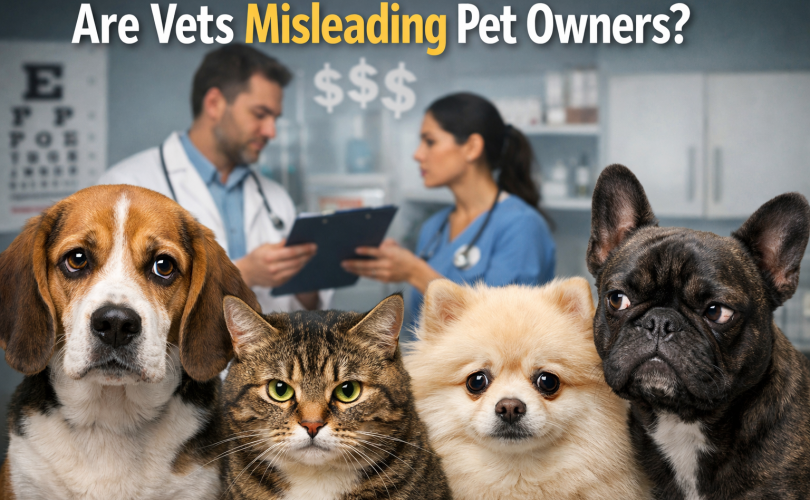
An investigation into veterinary memberships, hidden costs, and consumer rights in the UK, and are pet owners being misled?
The Promise of Preventive Care
Across the UK, veterinary practices increasingly offer subscription-based services such as “pet health plans” or “care clubs.” These often include:
- Routine vaccinations
- Flea and worm treatments
- Biannual health checks
On paper, these plans appear to offer convenience, savings, and peace of mind.
But what happens when those promised benefits are not as accessible as they seem?
Health Check vs Consultation. A Convenient Distinction?
One of the most contentious issues emerging from consumer complaints is the reclassification of appointments.
Pet owners report being told they are entitled to “free health checks,” only to find that:
- If symptoms are mentioned → the appointment is upgraded to a chargeable consultation
- The “free” health check is effectively deferred or withheld
This raises an important question:
If the distinction is not clearly defined in the contract, can it be used to deny a paid-for benefit?
Under the Consumer Rights Act 2015, services must be:
- Transparent
- Fair
- Delivered as described
A lack of clarity may amount to misrepresentation or unfair terms.
What Are Consumers Really Paying For?
Consider the typical cost structure:
- Monthly fee: ~£18.49
- Annual cost: ~£221.88
- Consultation fee: ~£57
If a consumer is still required to pay for consultations while paying a monthly fee, the value proposition becomes questionable.
Additional concerns include:
- Flea treatments often available for £9–£20 online
- Discounts that may be minimal
- Health checks that may not be readily accessible
Consumers may begin to ask:
“What exactly am I paying for?”
Duty of Care: Who Is Responsible?
A particularly concerning issue is the shift of responsibility onto the pet owner.
In some cases:
- Conditions are not identified during consultations
- Owners are told to “monitor and return if needed.”
- Responsibility for identifying issues appears blurred
This raises serious questions about professional accountability.
A veterinary surgeon owes a duty of care. It is NOT the responsibility of the pet owner to diagnose medical conditions.
A Wider Consumer Concern?
With large veterinary groups operating nationwide, concerns are growing that these issues may not be isolated.
Key risks include:
- Systemic misrepresentation of services
- Confusion over contractual entitlements
- Reduced trust between vets and pet owners
Regulatory bodies such as the Competition and Markets Authority and Trading Standards may play an important role in assessing whether such practices meet consumer protection standards.
Vet Misdiagnosis and Breach of Duty: My Experience with Mr. Tibbles
In March 2026, my daughter took our cat, Mr. Tibbles, to the vet after noticing blood in his
stools. As a member of the Pet Club, I am entitled to two free health checks per year, so we expected this visit to fall under that benefit.
The Appointment
The vet examined Mr. Tibbles and discharged him, stating that he was healthy. However, when
I received the bill, and I was told that the visit was classified as a consultation, not a health check.
This distinction mattered because consultations are chargeable, while health checks are
covered under the membership.
I challenged this classification. If the appointment was indeed a consultation, then the vet
should have conducted a thorough clinical assessment, which would have included noticing
the lumps on Mr. Tibbles’ tail. These lumps were later identified as stud tail, a condition that
should have been detected during the examination.
Discovery of Misdiagnosis
After my daughter brought Mr. Tibbles home, she noticed the lumps and, after researching,
discovered that he had a stud tail. This raised serious concerns about the vet’s diagnostic
accuracy and duty of care.
When I complained and refused to pay the £57 consultation fee, the practice responded that
the vet would not provide further assistance until the bill was settled. I eventually paid the
amount, but since then, no follow-up examination has been offered or scheduled.
Breach of Duty of Care
In my view, this situation represents a breach of duty of care.
The vet failed to:
▪ Failed to conduct a proper examination during the initial visit.
▪ Failed to identify a visible and relevant condition.
▪ Failed to provide appropriate follow-up care after payment.
Moreover, the classification of the appointment as a consultation rather than a health check
appears misleading, especially given that Mr. Tibbles was discharged as healthy.
This experience highlights a troubling issue within veterinary practice: misclassification of
appointments and inadequate clinical diligence. Pet owners rely on vets not only for
treatment but for honest, transparent communication. When that trust is broken, it
undermines both the profession and the welfare of the animals in their care.
Key takeaway: A health check should be routine and preventative. If a vet claims it was a
consultation, they must demonstrate that a clinical concern was assessed. Anything less risks
misleading pet owners and breaching professional duty
In a consultation, whose responsibility is it, the owner or the vet?
In a consultation, the vet is responsible for carrying out a FULL clinical examination appropriate to the concerns presented. The owner does not have to identify every problem for the vet. The vet has a professional duty to examine the animal properly.
1. What the pet owner is responsible for
A pet owner is expected to:
- Explain the reason for the visit (e.g., “blood in stools”)
- Share any symptoms they have noticed
- Provide relevant history (diet, behaviour changes, previous issues)
That’s it. Owners are not medically trained, so they are not expected to:
- Spot hidden conditions
- Diagnose anything
- Know what is clinically significant
- Point out every lump, bump, or abnormality
The law and the RCVS Code of Conduct recognise this.
2. What the vet is responsible for in a consultation
A consultation is a clinical appointment, meaning the vet must perform a clinical examination.
This normally includes:
- Checking the animal’s overall condition
- Palpating the body
- Looking for abnormalities
- Assessing the area related to the presenting complaint
- Noting any additional findings (e.g., lumps, lesions, parasites, injuries)
If the owner presents a medical concern (like blood in stools), the vet must:
- Examine the cat thoroughly
- Investigate the cause
- Identify any other relevant issues
- Record findings accurately
- Provide advice or treatment
A consultation is not a quick look or a surface-level check.
3. If the vet misses something obvious
If the vet fails to notice:
- Visible lumps
- Skin lesions
- Tail abnormalities
- Signs of infection
- Or anything that should be detected during a routine clinical exam
…that can be considered:
- Negligence
- Failure to perform a proper consultation
- Breach of duty of care
Especially when the condition (like stud tail) is:
- Visible
- Palpable
- Relevant to the cat’s health
4. Important point for your case
You reported blood in your stools, which automatically makes the appointment a clinical consultation, not a routine health check.
That means the vet had a professional obligation to:
- Conduct a full clinical exam
- Identify any abnormalities
- Record them
- Advice on them
- Offer follow‑up care
Missing the lumps on Mr. Tibbles’ tail and then refusing further help until you pay is not consistent with proper veterinary practice.
5. The owner is never expected to diagnose
The RCVS expects vets to:
- Examine the animal thoroughly
- Use their expertise
- Identify issues the owner may not have noticed
So no, it is not your responsibility to tell the vet everything that is wrong. It is the vet’s responsibility to find it.
Terms & Conditions Updates
Changing terms and conditions without notifying an existing customer can be unlawful, depending on the contract wording and consumer‑protection rules.
1. If you have the original paperwork, that is your contract
The terms and conditions you were given at the time you joined the ******* Pet Club form the binding contract between you and the veterinary practice.
They cannot simply change those terms later and apply them to you without:
- Notifying you clearly
- Giving you a reasonable time to accept or reject the changes
- Offering you the option to cancel if you do not agree
If they failed to do this, the original terms remain enforceable.
2. Changing T&Cs without notice can breach:
- Consumer Rights Act 2015
- Fair Trading Regulations
- Contract law principles of variation and consent
A business cannot unilaterally change a contract in a way that disadvantages the consumer unless the contract explicitly allows it and they follow proper notification procedures.
If they changed the rules about health checks, consultations, or fees after you joined, and did not inform you, that can be considered:
- Unfair contract variation
- Misrepresentation
- Failure to act with professional diligence
- The definition of a health check v consultation is not clear
3. Letters are strong evidence
Original sign‑up letters prove:
- What you agreed to
- What benefits were you entitled to
- What the practice promised at the time
If their current terms differ, that discrepancy supports your argument.
4. About the Wayback Machine & Precise Legal Position
- The Wayback Machine stores historical snapshots of websites.
- It is commonly used in investigations, journalism, and civil disputes.
- Courts can accept it as evidence, but sometimes require authentication (e.g., a digital forensics expert or certified capture).
Published material rarely disappears, and archived versions can help show what their website said at the time you joined.
5. Why this matters for my case
If the practice:
- Changed its terms
- Failed to notify you
- Then relied on the new terms to charge you or refuse care
…that can strengthen my claim of:
- Breach of contract
- Breach of duty of care
- Unfair commercial practice
And it supports my position that the £57 charge and subsequent refusal to treat Mr. Tibbles, unless I settled the account (which I have), were improper. Knowing that Mr. Tibbles has a stud tail, they have not requested him to be seen. I am now at a complete standstill and feel completely let down.
🐱🐶 Final Thoughts
Veterinary care should never become a source of confusion or financial anxiety.
Pet owners deserve:
- Clear terms
- Fair access to services
- Confidence that their animals are receiving proper care
When those expectations are not met, it is not only a contractual issue; it is a matter of trust.
My personal experience:
I will not rest until justice is done. I have submitted a formal Subject Access Request under the Freedom of Information Act to obtain all veterinary notes and have been assured that these will be provided no later than 1 May 2026. I intend to pursue legal action against the practice for negligence, breach of duty of care, and violation of contractual obligations. Their refusal to assist until payment was made, followed by the absence of any follow‑up examination, demonstrates a serious failure in professional responsibility.
If the practice has since altered its terms and conditions, those changes do not erase the original versions. The Wayback Machine, operated by the Internet Archive, preserves historical snapshots of websites, allowing earlier versions to be viewed even after updates. While courts sometimes question its evidentiary reliability because archived pages lack formal authentication, it remains a valuable tool for showing what was publicly available online at a given time. In essence, once material has been published on the web, it rarely disappears entirely, though proving its authenticity in legal proceedings may require certified web captures rather than relying solely on public archives.
**I will update this article in due course.
Further Reading & Resources
- Consumer Rights Act 2015
- Veterinary Surgeons Act 1966
- Reporting to Trading Standards – Citizens Advice
- https://tradingstandards.gov.wales/en/home/
- Find your local Trading Standards office – GOV.UK
- Cat Healthcare Plan | Healthy Pet Club | CVS Vets
- The Healthy Pet Club | CVS Veterinary Group
- CMA concludes market investigation with major reforms to veterinary sector – GOV.UK
- CMA launches review of vet sector – GOV.UK
- Email press@cma.gov.uk Phone: 020 3738 6460 Out of hours: 020 3738 6878
- Vets under increasing pressure to make money for corporate owners, BBC told – BBC News
- Complaints procedure – Veterinary Medicines Directorate – GOV.UK
- How to complain to VMD. If you are dissatisfied with our level of service, please email: postmaster@vmd.gov.uk for the attention of the Chief Operating Officer.
- Concerns about veterinary professionals | Royal College of Veterinary Surgeons
- Internet Archive: Digital Library of Free & Borrowable Texts, Movies, Music & Wayback Machine


Renata The Editor of DisabledEntrepreneur.uk - DisabilityUK.co.uk - DisabilityUK.org - CMJUK.com Online Journals, suffers From OCD, Cerebellar Atrophy & Rheumatoid Arthritis. She is an Entrepreneur & Published Author, she writes content on a range of topics, including politics, current affairs, health and business. She is an advocate for Mental Health, Human Rights & Disability Discrimination.
She has embarked on studying a Bachelor of Law Degree with the goal of being a human rights lawyer.
Whilst her disabilities can be challenging she has adapted her life around her health and documents her journey online.
Disabled Entrepreneur - Disability UK Online Journal Working in Conjunction With CMJUK.com Offers Digital Marketing, Content Writing, Website Creation, SEO, and Domain Brokering.
Disabled Entrepreneur - Disability UK is an open platform that invites contributors to write articles and serves as a dynamic marketplace where a diverse range of talents and offerings can converge. This platform acts as a collaborative space where individuals or businesses can share their expertise, creativity, and products with a broader audience.