
Disclaimer: This article is for informational and educational purposes only and does not constitute medical advice, diagnosis, or treatment. If you believe you may have been exposed to a virus or are experiencing symptoms such as fever, breathing difficulties, chest pain, or flu-like illness, seek advice from a qualified healthcare professional immediately. Information may change as health authorities continue to monitor outbreaks and emerging infections.
Understanding Hantavirus and Why It Is Making Headlines
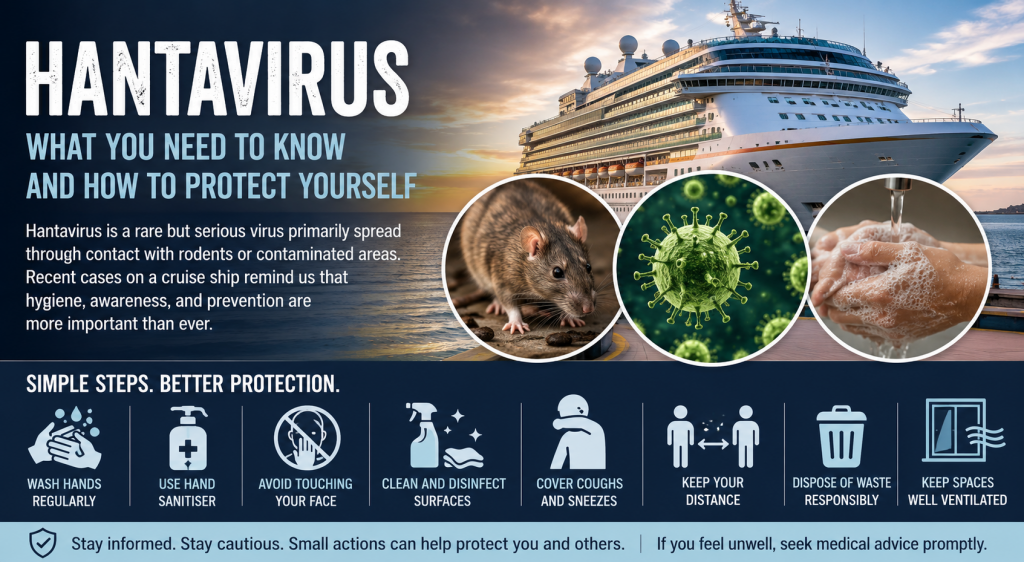
Many people had never heard of Hantavirus until recent media reports [1] linked infections to passengers travelling on a cruise ship. Unlike viruses such as COVID-19 or influenza, Hantavirus is relatively rare in the UK and Europe, which is why it has remained largely outside public awareness. However, when clusters of infections occur in enclosed environments where people are in close contact, public concern understandably rises.
Footnote: [1] Media Reports: Hantavirus cruise ship outbreak live: Canary Islands reject virus-hit MV Hondius – The Mirror
Hantavirus is a group of viruses primarily carried by rodents, especially rats and mice. Humans can become infected through contact with rodent urine, droppings, saliva, or contaminated dust particles that become airborne. In some cases, touching contaminated surfaces and then touching the mouth, nose, or eyes may also increase the risk of infection.
The virus is not new. It has existed for decades and has been identified in various parts of the world, including Asia, Europe, and the Americas. Different strains exist, with some causing severe respiratory illness known as Hantavirus Pulmonary Syndrome (HPS), while others may affect the kidneys and cause Haemorrhagic Fever with Renal Syndrome (HFRS).
Cruise ships attract global attention because they bring together thousands of passengers in shared dining areas, entertainment venues, corridors, and cabins. While cruise ships maintain hygiene protocols, infections can still occur if contaminated goods, food supplies, waste areas, or rodent exposure are involved. In densely populated environments, illnesses can spread quickly through shared surfaces and close proximity between passengers.
Importantly, health experts continue to stress that Hantavirus is generally linked to rodent exposure rather than casual human interaction. However, outbreaks often remind people about the importance of hygiene, ventilation, and infection prevention in all public spaces.
Cross-Contamination and Why Hygiene Still Matters
Cross-contamination occurs when harmful bacteria, viruses, or contaminants are transferred from one surface, person, object, or substance to another. This can happen more easily than many people realise. A person may touch a contaminated handrail, lift button, buffet utensil, door handle, or table surface and then unknowingly touch their face moments later.
In crowded environments such as airports, cruise ships, shopping centres, hospitals, public transport, schools, and offices, germs can spread rapidly when people do not practise good hygiene.
Being too close to people in confined spaces may also increase the risk of exposure to respiratory droplets from coughing, sneezing, or even speaking at close range. While not every illness spreads in the same way, maintaining sensible hygiene habits is one of the simplest ways to reduce risks generally.
Some people are more vulnerable to infections than others, including older adults, disabled individuals, people with weakened immune systems, and those with underlying health conditions. For these individuals, avoiding unnecessary exposure to illness can be particularly important.
How to Reduce the Risk of Infection and Cross-Contamination
Regardless of whether there is concern about Hantavirus, seasonal flu, COVID-19, norovirus, or other infections, practising good hygiene and being mindful of your surroundings can help reduce risks considerably.
Safety Tips to Help Protect Yourself
- Wash your hands regularly with soap and water for at least 20 seconds.
- Use hand sanitiser when soap and water are unavailable.
- Avoid touching your face, especially your eyes, nose, and mouth.
- Keep surfaces clean, especially kitchen counters, handles, phones, and keyboards.
- Avoid sharing drinks, utensils, towels, or personal items.
- Keep food sealed properly and dispose of waste responsibly.
- Avoid contact with rodents, rodent droppings, nests, or contaminated areas.
- Wear gloves and a mask if cleaning areas contaminated by rodents.
- Never sweep or vacuum rodent droppings dry, as this can release particles into the air.
- Ensure good ventilation in enclosed spaces.
- Keep a respectful distance from people who appear visibly unwell.
- Cover coughs and sneezes using tissues or your elbow.
- Stay home if you are feeling ill to avoid spreading infections to others.
- Practise extra caution in crowded environments such as cruise ships, airports, hospitals, and public transport.
- Disinfect high-touch surfaces regularly.
- Be cautious in buffet-style dining areas where many people handle serving utensils.
- Maintain good personal hygiene when travelling abroad.
- Seek medical advice promptly if symptoms worsen or breathing difficulties occur.
Symptoms of Hantavirus
Symptoms can initially resemble flu-like illnesses, which may make early diagnosis difficult. These symptoms can include:
- Fever
- Fatigue
- Muscle aches
- Headaches
- Chills
- Nausea
- Dizziness
- Abdominal pain
- Breathing difficulties in severe cases
Because symptoms overlap with many common illnesses, medical professionals often need laboratory testing to confirm infection.
Staying Alert Without Panic
While media coverage can sometimes create fear, it is important to keep risks in perspective. Hantavirus infections remain relatively uncommon compared to many other infectious diseases. Nevertheless, outbreaks serve as a reminder that good hygiene, cleanliness, ventilation, and sensible precautions still matter in everyday life.
Public health awareness is not about living in fear of germs or isolating from society. It is about reducing unnecessary risks, protecting vulnerable people, and encouraging healthier habits in shared environments.
Sometimes the simplest actions, such as washing hands properly, cleaning surfaces, avoiding cross-contamination, and respecting personal space when someone is unwell, can significantly reduce the spread of many illnesses.
Further Reading & Resources:
- Hantavirus cruise ship outbreak live: Canary Islands reject virus-hit MV Hondius – The Mirror
- Suspected hantavirus outbreak kills 3 people on cruise ship – CBS New York
- What is hantavirus? How is it transmitted and what are the symptoms? – UK Health Security Agency
- Hantavirus strain that spreads between humans found in cruise ship passengers – BBC News
- https://www.who.int/news-room/fact-sheets/detail/hantavirus
- What is hantavirus and how does it spread? | CNN
- What is Hantavirus – When to Worry (6 May 2026 Update) – Health Service Navigator
- About Hantavirus | Hantavirus | CDC
- Hantaviruses – GOV.UK
- What are germs and how do they spread? | Dettol UK
- Germs: How To Prevent Their Spread, Cleveland Clinic
- What infections are, how they are transmitted and those at higher risk of infection in children and young people’s settings – GOV.UK
- https://disabledentrepreneur.uk/category/germ-awareness/
- Microbial Exchange via Fomites and Implications for Human Health | Current Pollution Reports | Springer Nature Link


Renata The Editor of DisabledEntrepreneur.uk - DisabilityUK.co.uk - DisabilityUK.org - CMJUK.com Online Journals, suffers From OCD, Cerebellar Atrophy & Rheumatoid Arthritis. She is an Entrepreneur & Published Author, she writes content on a range of topics, including politics, current affairs, health and business. She is an advocate for Mental Health, Human Rights & Disability Discrimination.
She has embarked on studying a Bachelor of Law Degree with the goal of being a human rights lawyer.
Whilst her disabilities can be challenging she has adapted her life around her health and documents her journey online.
Disabled Entrepreneur - Disability UK Online Journal Working in Conjunction With CMJUK.com Offers Digital Marketing, Content Writing, Website Creation, SEO, and Domain Brokering.
Disabled Entrepreneur - Disability UK is an open platform that invites contributors to write articles and serves as a dynamic marketplace where a diverse range of talents and offerings can converge. This platform acts as a collaborative space where individuals or businesses can share their expertise, creativity, and products with a broader audience.