Empty Nest Syndrome: When Silence Feels Loudest
A compassionate guide to Empty Nest Syndrome, exploring its emotional impact and offering practical ways to cope with loneliness, especially for parents without partners or family support.

DISABLED ENTREPRENEUR – DISABILITY UK
Disability UK Online Health Journal – All In One Business In A Box – Forum – Business Directory – Useful Resources – Health – Human Rights – Politics
DISABLED ENTREPRENEUR – DISABILITY UK
Disability UK Online Health Journal – All In One Business In A Box – Forum – Business Directory – Useful Resources – Health – Human Rights – Politics
Browsing Category
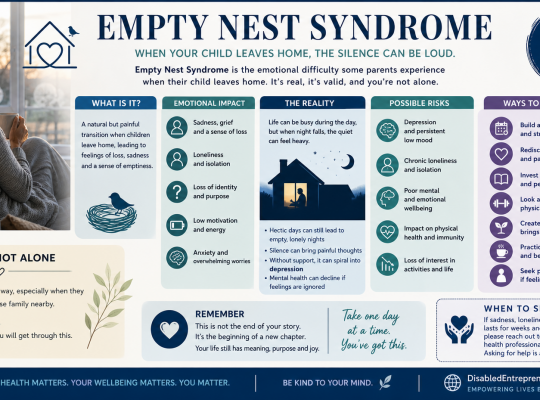
A compassionate guide to Empty Nest Syndrome, exploring its emotional impact and offering practical ways to cope with loneliness, especially for parents without partners or family support.
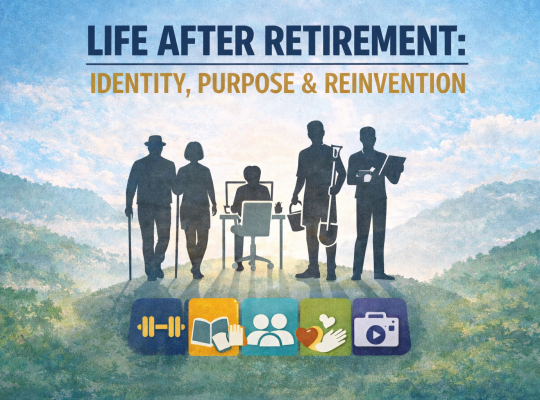
A comprehensive guide to retirement, mental health, and staying active. Learn how athletes and everyday people can reinvent themselves, reduce dementia risk, and find purpose after work.
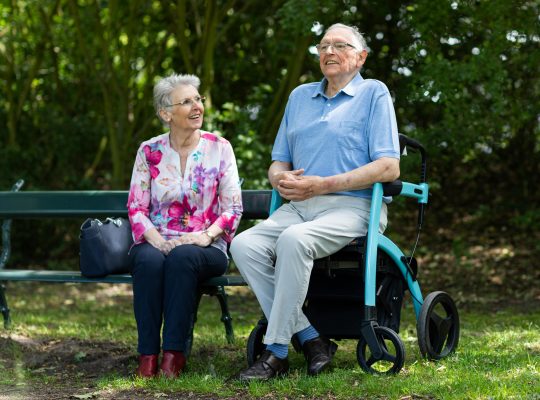
Finding the right balance between independence and support for older people is an ongoing challenge that calls for understanding, adaptability, and careful planning. When we look at independence, customized help to fit each person’s needs, and set up environments that empower, we can respect personal freedom while keeping everyone safe and healthy.
Are annual prescription reviews mandatory? Learn your rights across the UK, including consent, blood tests, mental health medication, self-isolation, and GP accountability.

A personal reflection on taking things for granted, regret, grief, empty nest syndrome, and the connection to mental health—highlighting how loss teaches us the value of people and moments.
People with OCD don’t “choose” their thoughts or compulsions. Telling someone to “just get over it” is dismissive, harmful, and perpetuates ableist attitudes. If someone has lived with OCD for decades and tried all known interventions, Cognitive Behavioural Therapy (CBT), Exposure and Response Prevention (ERP), medication, counseling, and even alternative therapies such as hypnosis, it is unjust to boil their suffering down to a fad.
Invisible disabilities deserve recognition, understanding, and respect. Ableist attitudes rooted in ignorance and dismissiveness create barriers that can be just as disabling as the condition itself. Instead of questioning someone’s reality or minimising their struggles, we should listen, believe, and support. The lived experiences of those with invisible disabilities, like the editor who has battled OCD for decades, remind us that what cannot be seen can still have profound impact. True inclusivity means dismantling ableism and embracing empathy.

Loneliness is more than just a feeling; it’s a silent epidemic affecting millions of elderly people in the UK and around the world. Behind closed doors, many older individuals live in silence, unseen and unheard, with devastating consequences. As someone who experienced the heartbreaking loss of a parent who lived alone, I want to share my personal story and raise awareness about the hidden dangers of isolation in older adults.

Trauma is not one-size-fits-all. For some, it heals. For others, it becomes their lifelong companion. It’s not about being weak, it’s about having seen and felt too much. It’s about carrying a weight that no one else can see.

Epilepsy is a long-term neurological condition that causes recurrent seizures, which are sudden bursts of electrical activity in the brain. These seizures can vary in frequency and intensity and may manifest as convulsions, loss of awareness, or unusual behaviours. Epilepsy affects over 600,000 people in the UK and can have a profound impact on daily life, including employment, driving, education, and mental well-being.